Phage Therapy
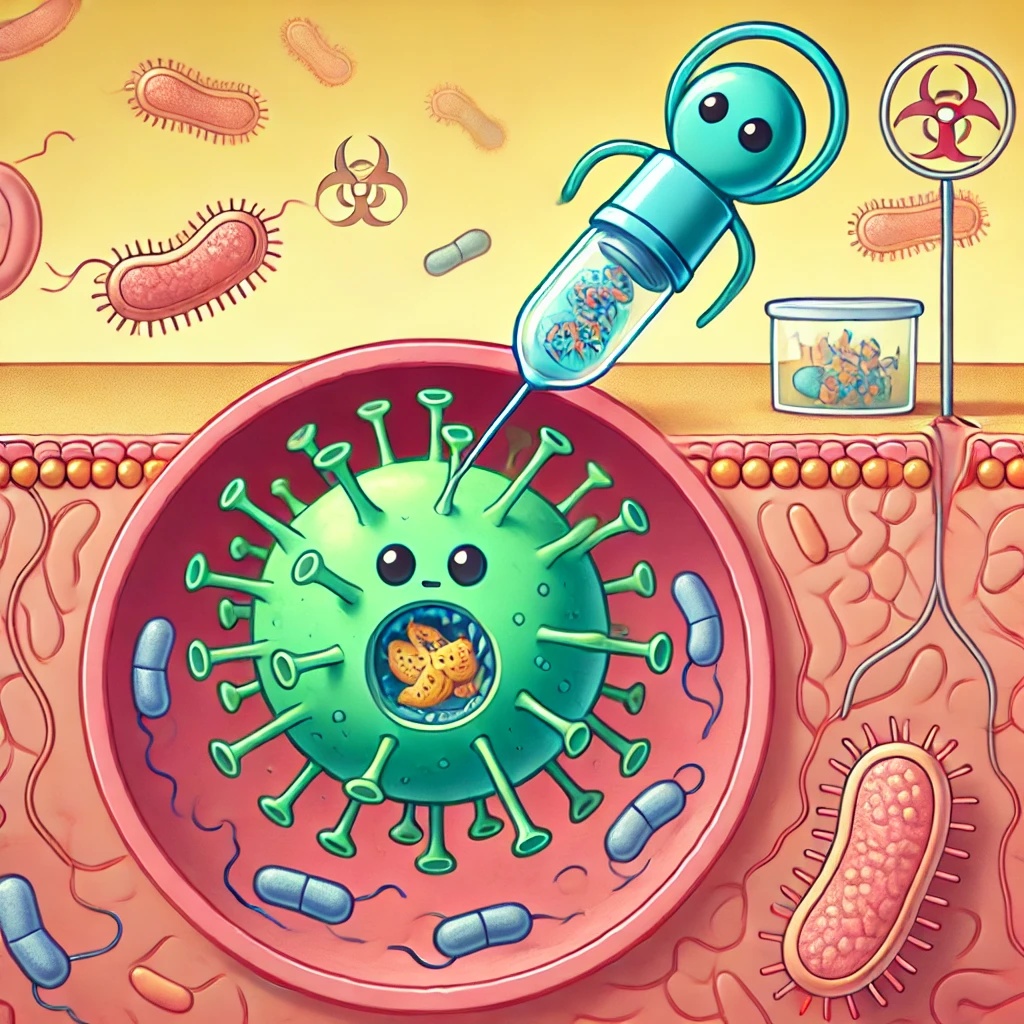
Currently, our primary research interests revolve around unraveling the intricate interplay between bacteria, bacteriophages, and the host’s innate immune system. We are particularly focused on understanding the mechanisms underlying phage cocktail synergy, phage-antibiotic synergy, and immunophage synergy.
We believe that the major challenges in achieving successful outcomes with phage therapy lie in two key areas: the remarkable specificity of phages and the rapid emergence of phage resistance. The specificity of phages, while advantageous in terms of safety—since phages do not harm human cells or beneficial microbiota—presents a challenge when it comes to targeting a broad spectrum of bacteria with a single phage. This specificity necessitates either precise identification of the bacterial target and matching it with the appropriate phage (personalized therapy) or the use of phage cocktails, with or without antibiotics, to empirically target a wide range of unidentified bacteria. While the latter approach is more feasible within current drug development and regulatory frameworks, the true potential of phage therapy lies in its application as a personalized treatment. How to develop and implement phage therapy in a personalized medicine context remains one of the most compelling and ambitious research questions we are determined to answer. This quest drives our ongoing exploration of the evolving landscape of phage therapy, with the goal of creating more targeted, effective, and personalized solutions to combat bacterial infections.
At the drug discovery level, we are deeply interested in leveraging directed evolution to enhance the efficacy of bacteriophages, broaden their bacterial coverage, and overcome phage resistance. By guiding the evolution of phages, we can potentially develop more robust therapies that are better equipped to combat bacterial infections. Mathematical modeling plays a crucial role in this process, providing a powerful tool for designing phage training protocols and predicting the evolutionary trajectories of phage phenotypes. In addition to directed evolution, we are passionate about applying systems biology principles to phage engineering. This integrative approach allows us to map out the complex interactions between phages, bacteria, and the host immune system, leading to more informed strategies for engineering phages with optimized therapeutic properties. Through this work, we aim to contribute to the development of next-generation phage therapies that are more precise, effective, and resistant to bacterial countermeasures.
Autophagy

(1) Stroke
Autophagy plays a dual and complex role in cellular survival, acting both as a mechanism to promote cell health and, under certain conditions, as a trigger for cell death. Our research focuses on modeling the intricate pathways of autophagy to understand this delicate balance and how the modulation of specific proteins involved in the process can influence cell fate. By enhancing or suppressing key proteins, we aim to explore how these interventions affect cellular survival and death in various disease contexts.
One particular focus of our research is the interplay between autophagy and apoptosis in stroke, where both processes are known to occur simultaneously. Despite ongoing efforts to achieve neuroprotection by modulating autophagy, therapeutic success has remained elusive. The primary challenge lies in the context-dependent effects of autophagy: what is protective under one condition may become harmful under another. Through a combination of mathematical modeling and laboratory experiments, we have centered our attention on Beclin-1, a key protein upregulated during stroke.
Our findings reveal that the effect of Beclin-1-induced autophagy is highly dependent on the level of ischemic stress. Under mild stress conditions, autophagy is largely cytoprotective, aiding in cell survival. However, under severe ischemic stress, Beclin-1-driven autophagy shifts towards a cytotoxic role, contributing to cell death. This discovery suggests the existence of a “cytoprotective window” for Beclin-1 expression, within which autophagy promotes cell survival. This window is influenced by various factors, including the severity of stress and other cellular conditions.
By quantitatively mapping the relationship between stress levels and Beclin-1 expression, our work has proposed downregulation of Beclin-1 under severe ischemic stress as a potential neuroprotective strategy. Our simulations suggest that inhibiting Beclin-1 could extend the “Golden Hour” for thrombolytic therapy, offering a wider therapeutic window and enhancing treatment outcomes in stroke.
(2) Autophagy-mediated Cancer Cell Resistance to PI3K Inhibitors
The PI3K signaling pathway is critical in many cancers, and its inhibition can induce autophagy as a compensatory survival mechanism. Hence, upregulation of autophagy in cancer cells can render them resistant to PI3K inhibitors. Our earlier work has shown that concomitant treatment of PI3K inhibitor and autophagy inhibitor achieved synergistic cancer cell killing. Based on this finding, we are working to understand the biological mechanisms by which this synergy is achieved. As a means to achieve this end, we are planning to develop QSP models to explore the interaction between PI3K inhibitors and autophagy, aiming to identify optimal strategies that enhance therapeutic efficacy while mitigating resistance.
Clinical Pharmacology and Data Science in Anesthetic Medicine
Anesthetic medicine has long shared a close relationship with clinical pharmacology, primarily due to the critical need for precise dosing to ensure optimal induction and recovery from anesthesia. Pharmacokinetic/Pharmacodynamic (PK/PD) modeling is widely employed to support individualized dosing strategies in this field.
Our laboratory has maintained a strong, collaborative partnership with anesthesiologists over the years. One of our most highly cited joint studies involved a pharmacodynamic investigation of remimazolam, a novel anesthetic agent. This study revealed a significant age-dependent effect on anesthetic outcomes by leveraging multiple endpoints.
In addition, we have applied machine learning and data science methodologies to develop predictive models for postoperative outcomes. For instance, we identified a composite biomarker that accurately predicts postoperative mortality. In the context of nephrectomy, where acute and chronic kidney injuries are major clinical concerns, our research highlighted the critical role of inflammatory biomarkers and early postoperative creatinine levels in risk stratification.
Industry Collaboration
As an applied discipline, clinical pharmacology delivers its greatest value when integrated into the drug development process. While basic research drives the discovery of novel drug targets and compounds, a thorough understanding of the PK/PD properties of lead candidates—and the ability to optimize dosing regimens—is essential for success in both preclinical and clinical development phases.
Our team has collaborated with multiple pharmaceutical and biotechnology companies to support key decision-making processes, including: (1) Biomarker discovery through machine learning approaches, (2) Determination of the first-in-human (FIH) dose, (3) Dose-response analysis based on Phase 1 clinical trial data, and (4) Model-informed derivation of the recommended Phase 2 dose (RP2D).
© 2025 Dongwoo Chae. All rights reserved.
 YS ClinPharm